Stock Abbreviation : Topsec      Stock Code : 002212
7*24 hour service: 400-777-0777

IoV Security

Guard every smart journey, empower a safer connected vehicle world.

Background

With the accelerated convergence of automotive electronics and ICT technologies, digitalization, intelligence, and connectivity have become the core engines driving the development of the automotive industry. The automobile itself is no longer merely a mechanical means of transportation but is rapidly evolving into a mobile intelligent platform that continuously creates value and enables software-defined mobility. While the digital transformation and upgrading of the automotive industry bring developmental opportunities, they also introduce risks from the digital world. As the cornerstone for ensuring the rapid and healthy development of automotive intelligence, Internet of Vehicles (IoV) cybersecurity has garnered widespread attention from all sectors of society.

Relevant Policies
2024
In 2024, GB 44495-2024 "Technical Requirements for Vehicle Information Security" and GB 44496-2024 "General Technical Requirements for Vehicle Software Upgrades" were issued, set to take effect from January 1, 2026. This marks the implementation of China's first mandatory standards for Internet of Vehicles (IoV) security, establishing unified technical baselines for vehicle information security and OTA upgrade security.
2024
In 2024, five ministries and commissions, including the Ministry of Industry and Information Technology (MIIT), the Ministry of Public Security (MPS), the Ministry of Natural Resources (MNR), the Ministry of Housing and Urban-Rural Development (MOHURD), and the Ministry of Transport (MOT), jointly issued the Notice on Announcing the List of Pilot Cities for the Integrated Application of "Vehicle-Road-Cloud" in Intelligent and Connected Vehicles (ICVs).
2022
In 2022, the Ministry of Industry and Information Technology (MIIT) issued the *Construction Guide for the Standard System of Cybersecurity and Data Security in Vehicle-to-Everything (V2X)*. The Guide clearly states that "by 2025, a relatively complete standard system for cybersecurity and data security in V2X will be established, with over 100 standards developed, enhancing the coverage of standards across subdivided fields, strengthening standard service capabilities, improving the application level of standards, and supporting the secure and healthy development of the V2X industry."
2021
In 2021, the "Notice on Strengthening Cybersecurity and Data Security in Vehicle Networking" (MIIT Cyber Security [2021] No. 134) was issued. As the first specialized management document addressing security throughout the entire automotive lifecycle, it outlines 17 quantified compliance requirements across six key areas: intelligent connected vehicles, in-vehicle communication, service platforms, data security, and standard systems. It also clarifies the dual-track responsibility of enterprises to implement both "management systems and technical measures."
2021
In 2021, five government departments, including the Cyberspace Administration of China, the National Development and Reform Commission, the Ministry of Industry and Information Technology, the Ministry of Public Security, and the Ministry of Transport, jointly released the Provisions on Several Issues Concerning the Management of Automotive Data Security (for Trial Implementation).
2015
In 2015, the "Technology Roadmap for Key Areas of 'Made in China 2025' (2015 Edition)" identified intelligent connected vehicles as one of the top ten key priority areas. It explicitly called for the establishment of a technical standard system covering "network communication, cybersecurity, and information services," providing high-level design and policy guidance for the development of technologies and industries related to IoV security.
2024
In 2024, GB 44495-2024 "Technical Requirements for Vehicle Information Security" and GB 44496-2024 "General Technical Requirements for Vehicle Software Upgrades" were issued, set to take effect from January 1, 2026. This marks the implementation of China's first mandatory standards for Internet of Vehicles (IoV) security, establishing unified technical baselines for vehicle information security and OTA upgrade security.
Requirement Analysis
Cybersecurity incidents are occurring with increasing frequency, posing severe threats to driving safety
As vehicle interfaces become more open and communication links increase, attack methods such as remote injection, command hijacking, and unauthorized privilege escalation are growing increasingly sophisticated. The attack surface has evolved from localized hardware infiltration to coordinated network-wide assaults, posing risks to vehicle powertrain control, steering systems, and the safety of drivers and passengers.
The acceleration of data flows has heightened the risks of privacy breaches
The Internet of Vehicles (IoV) integrates massive amounts of high-value data, including user trajectories, environmental perception data, and biometric information, which are highly vulnerable to interception by hackers across multiple stages of transmission. Without stringent, lifecycle-wide protection, the unauthorized leakage or illegal cross-border transfer of such sensitive information would directly violate legal red lines, damaging corporate reputation and compromising user privacy.
The rapid iteration of regulatory frameworks is creating mounting policy pressure on market access
Domestic and international cybersecurity standards for the Internet of Vehicles (IoV) are now entering a mandatory enforcement phase. National standards series, exemplified by GB 44495, have become critical prerequisites for product market entry. Failure to precisely align with regulatory requirements across different markets will result in products facing delayed launches or administrative penalties, thereby increasing corporate compliance costs and hindering business expansion.
Technical System

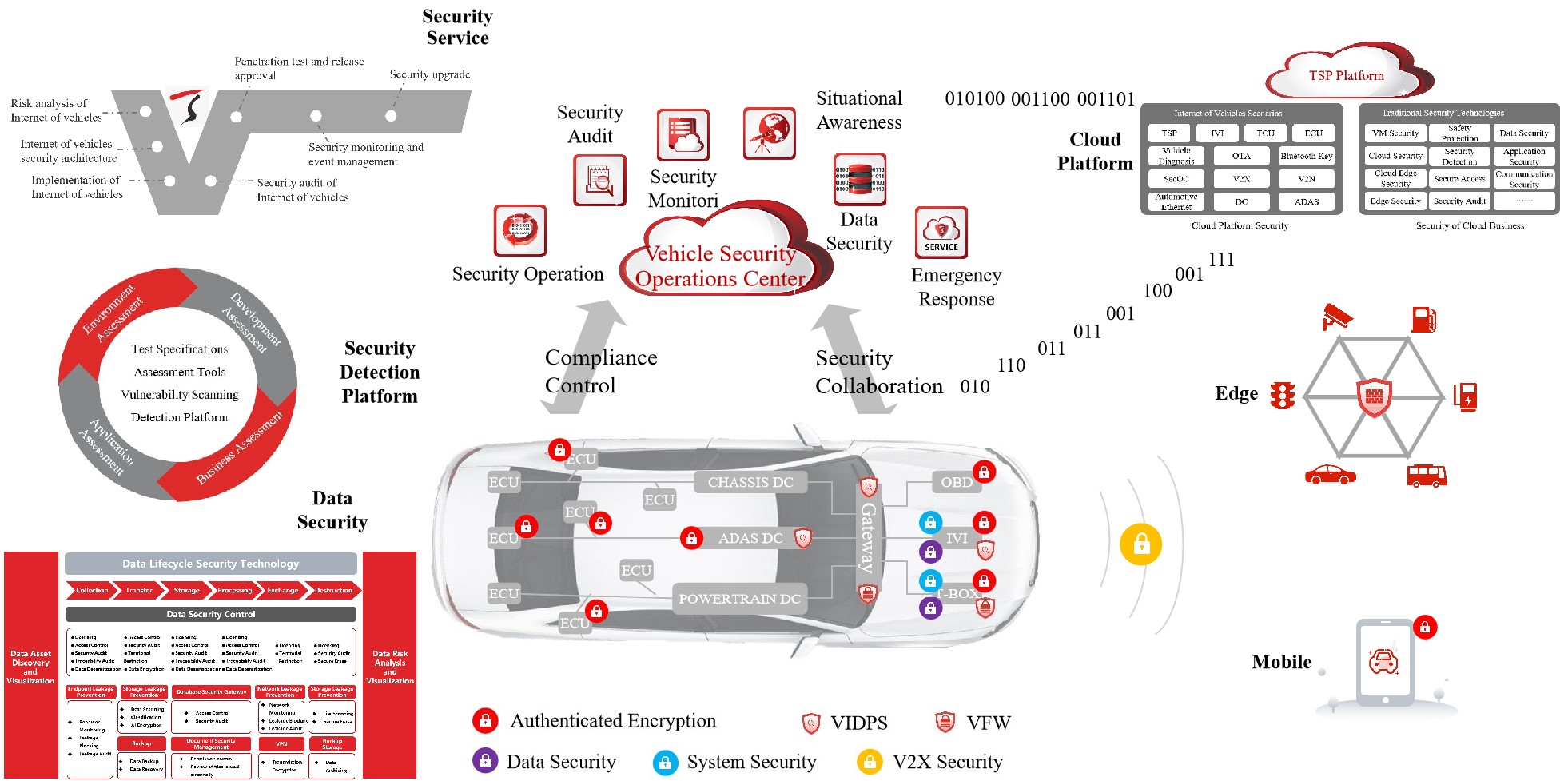
With the rapid advancement of automotive intelligence, traditional modes of transportation are rapidly evolving into a new generation of mobile data centers, integrating perception, computation, and communication. While digital technologies are bringing revolutionary changes to mobility, they have also introduced comprehensive cybersecurity and data security risks into the smart vehicle environment. These risks extend from in-vehicle systems and remote control of individual vehicles to vehicle-to-infrastructure communication and cloud control platforms across the entire vehicle-road-cloud ecosystem. Security threats now exhibit new characteristics of cross-domain and chain-reaction proliferation. Given the unique nature of automobiles as vehicles carrying people, IoV security risks not only directly threaten the safety of drivers and passengers but also involve social public safety and national security. It has become a fundamental safeguard for the healthy development of the smart automotive industry and a critical component of national cybersecurity strategy.

Leveraging three decades of technical expertise and service experience in the cybersecurity field, Topsec deeply integrates security technology with IoV business scenarios. We have developed a series of in-vehicle security products, including in-vehicle firewalls, intrusion detection systems, and in-vehicle authentication and encryption solutions. This forms our vehicle-road-cloud collaborative, defense-in-depth protection system, covering in-vehicle, roadside, cloud, and data security. Furthermore, through the construction of an IoV security operations platform, we provide full lifecycle security services—from detection and risk warning to emergency response. This offers IoV customers comprehensive, multi-layered, and deeply integrated security assurance. Our solutions assist industry clients in meeting domestic mandatory standards such as GB 44495 and GB 44496, as well as international regulations like UNECE R155 and R156, thereby safeguarding the high-quality development of the intelligent and connected vehicle industry.
Comprehensive Strength
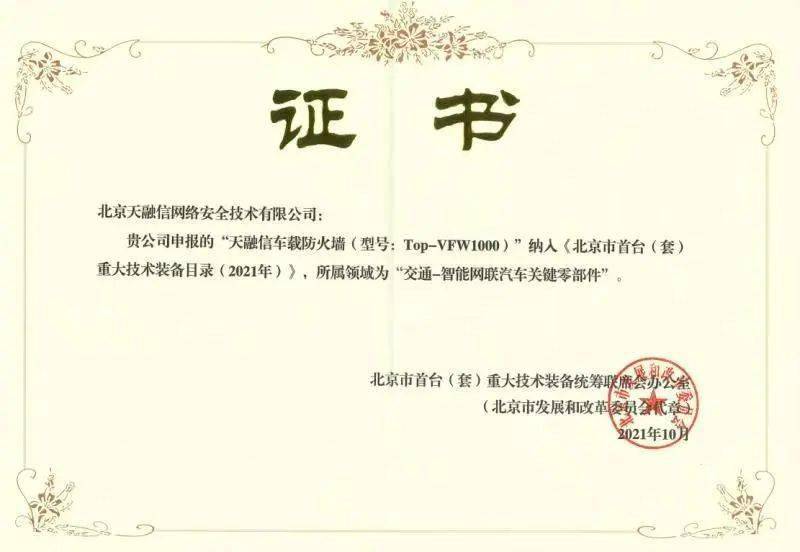
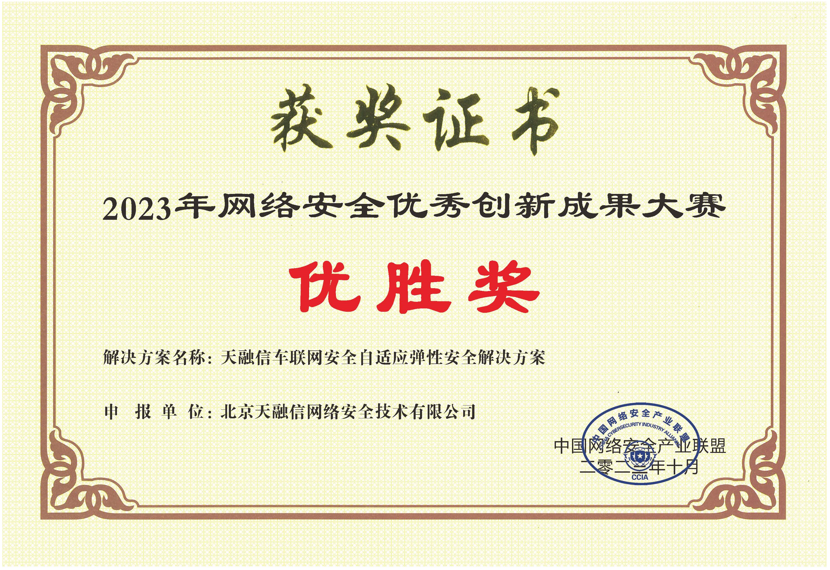
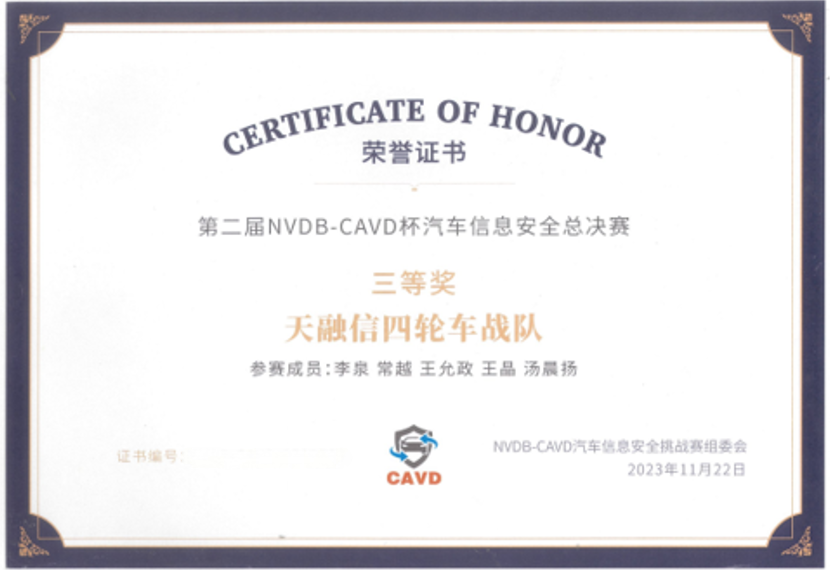
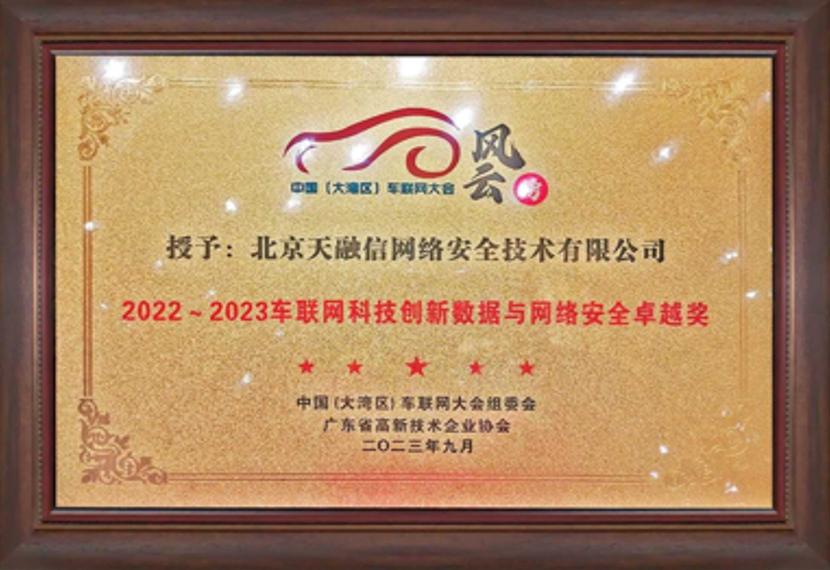
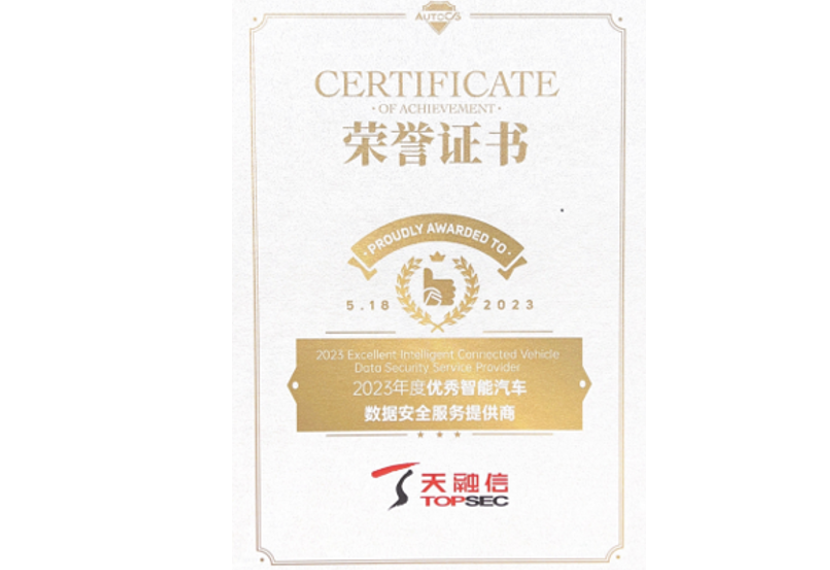
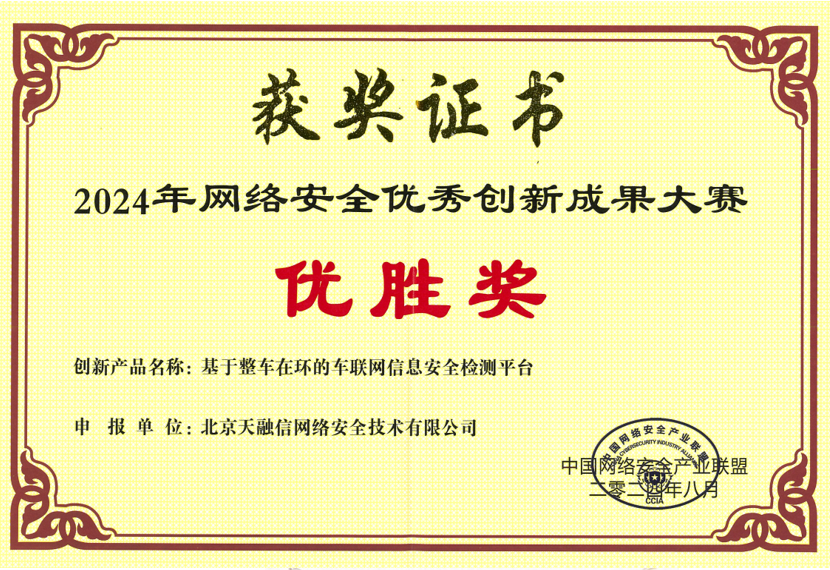
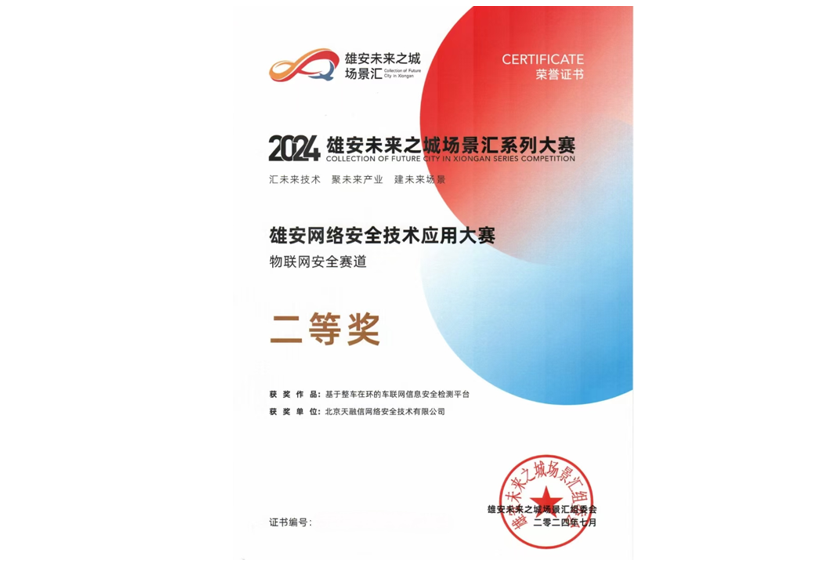
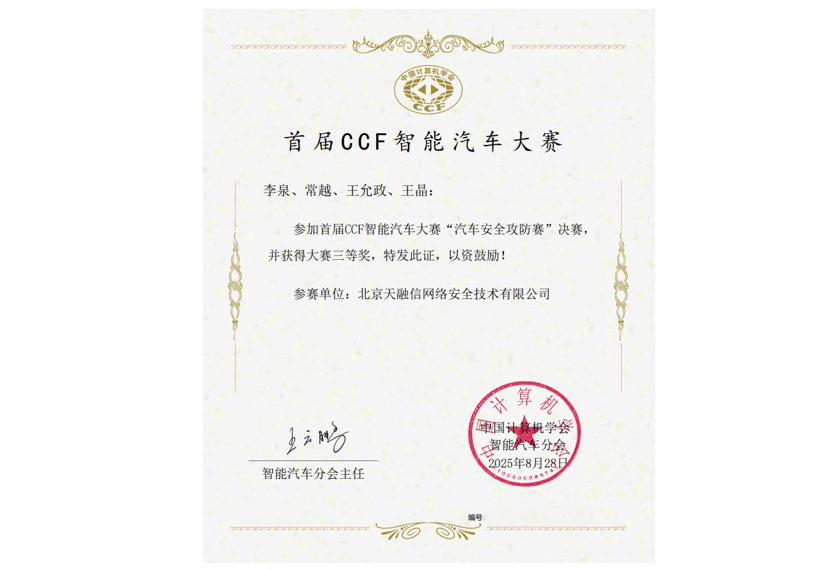
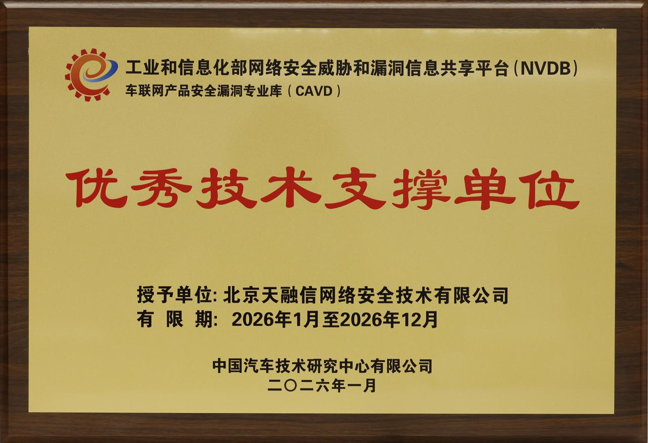
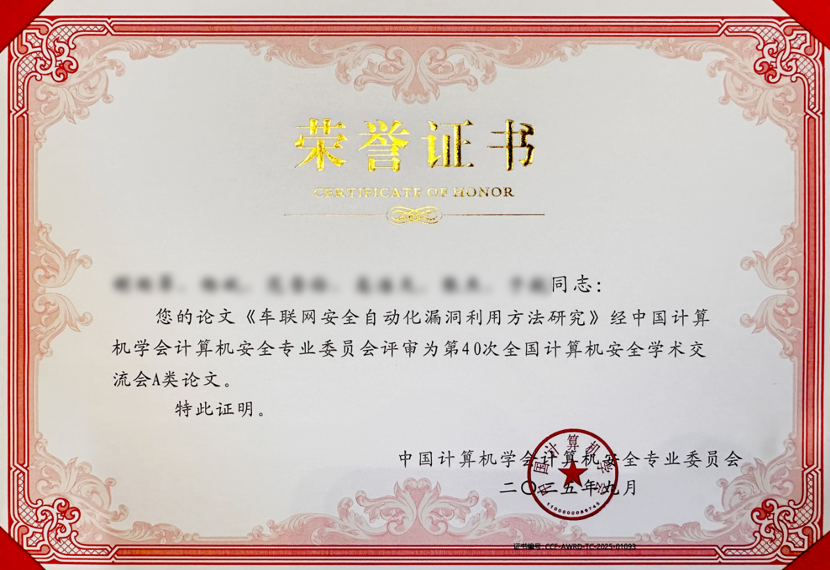
Topsec serves as the chair unit of the China Computer Federation (CCF) Internet of Vehicles (IoV) Security Working Group, profoundly guiding collaborative industry advancement. Through actively organizing high-level industry forums and competitions, publishing authoritative industry recommendations at major conferences, and exclusively sponsoring the "Topsec Cup" Information Security Challenge for five consecutive years, the company consistently amplifies its leadership influence within the sector. In the realm of research and innovation, Topsec undertakes multiple national-level key research projects. In 2025, it successfully secured the Xiong'an New Area Science and Technology Innovation Special Project—focused on key technologies for cybersecurity intrusion detection and testing validation in intelligent connected vehicles. Concurrently, Topsec actively contributes to standardization efforts, spearheading the development of China's first vehicle-level security evaluation group standard, *"Technical Requirements for Cybersecurity Testing of Intelligent Connected Vehicles" (T/CSAC 019-2025)*. Regarding ecosystem development, Topsec maintains industry leadership in IoV security competitions, consistently achieving top rankings in attack-and-defense drill events for multiple years. Its in-vehicle firewall was among the first products selected for the Beijing Municipal "First Set" Major Technical Equipment initiative. Leveraging exceptional technical capabilities, the company has established deep collaborations with leading automakers such as BAIC, GAC, Changan, Dongfeng, Seres, and Yutong, as well as authoritative testing institutions including the Beijing Institute of Product Quality Supervision and Inspection, Xiangyang Da'an Automotive Testing Center, and the Third Research Institute of the Ministry of Public Security. Through close synergy across the industry chain, Topsec continues to drive the high-quality development of the security ecosystem for the intelligent and connected vehicle industry.